Monday, July 17, 2017

World Hepatitis Day is July 28th - are you at risk for viral hepatitis?

"World Hepatitis Day is recognized annually on July 28th, the birthday of Dr. Baruch Blumberg (1925-2011). Dr. Blumberg discovered the hepatitis B virus in 1967 and two years later developed the first hepatitis B vaccine and for these achievements won the Nobel Prize. 

In order to raise awareness of this hidden epidemic, July 28th has been designated as World Hepatitis Day.  Organizations around the world, including WHO and CDC, use World Hepatitis Day to raise awareness of the problem and what needs to be done to strengthen efforts in prevention, screening and control of viral hepatitis.  This year’s World Hepatitis Day theme is 'Eliminate Hepatitis'."

Read more about WHO and CDC efforts: https://www.cdc.gov/hepatitis/worldhepdayresources.htm. 

Are you at risk for viral hepatitis? Take this 5-minute assessment from the CDC and get a personalized report.

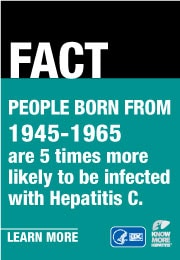
FACT: People born from 1945 - 1965 are 5 times more likely to be infected with Hepatitis C.  Learn more: //www.cdc.gov/KnowMoreHepatitis/
           

Friday, July 14, 2017

A Friday listen: low-cost wheelchairs, fighting cancer in Senegal, and a new twist on the "classic" marshmallow test

Listening to news and podcasts while getting other work done is one of my favorite things to do now that my work laptop no longer has a CD drive in it. To that end I hop you enjoy these recent NPR news stories related to health and medicine. Have a listen!


Wednesday, July 12, 2017

Food safety around the grill - remember to SCCCCR

Did you know that food poisoning peaks in the summer? Heat can quickly cause our food to go bad.

Anyone who steps outside on weekends during the summer is likely greeted by the smell of grilling food from a neighbor. Most of us who grill, always take the time to clean the grill properly to keep food tasty, but we might not give as much attention to food safety. Lucky for us, the CDC has created this lovely infographic on grilling food safely. 

Remember to Separate, Chill, Clean, Cook, don't Cross-contaminate, and Refrigerate!


Friday, July 7, 2017

Health Science Librarians and The Point-of-Paradigm - part 1 (guest post from Michele Matucheski)

Health Science Librarians and The Point-of-Paradigm 
Report from MLA-17 in Seattle : Part 1
By Michele Matucheski, MLA, AHIP – Medical Librarian for Ascension Wisconsin
June 30, 2017

I attended the 2017 MLA Conference in Seattle, Washington, with the generous support of a $500 WHSLA Continuing Education Travel Grant.   For a return on WHSLA’s investment, I will be posting a series of articles to share what I learned at MLA17.

As new clinical decision support and point-of-care tools have come on the market and are being integrated into the EMR/EHR, I’ve been wondering where that leaves Health Science Librarians and Library Services if Clinicians are doing it for themselves?   Are Library Services being by-passed for this more direct and integrated access at point-of-care?  Some people have even said that they don’t need anything besides UptoDate and Google.    In that wake, multiple professional Librarian jobs are being eliminated, and Libraries closed.  Where do Health Science Libraries and Librarians fit in this new world order?  Is there a new place for us in this golden age of Information?  These were just a few of the existential questions on my mind as I headed for Seattle for the 2017 Medical Library Association Conference last May.

One of the most interesting and illuminating programs I attended  was a Sunrise Seminar sponsored by Wolters-Kluwer / Ovid that offered a new model as to where Health Science Librarians and Libraries fit into the larger scheme of supporting the information / knowledge needs of medical, nursing, and health professionals today.


Now, through the magic of YouTube, you can watch the full recording of this session (51 min.).

Disclaimer : These Sunrise Seminars are a chance for vendors to show how their particular products  solve a vexing problem in the world today.  That said, Anne Dabrow featured several products from Lippincott / Wolters-Kluwer in the program.    I am not advocating for any of these Lippincott tools, nor does my company currently subscribe to any of them.  I am more interested in the overarching model of information needs that Dabrow describes.

If you don’t have the time or attention span to watch the video, consider reading the articles the speaker provided on the topic :

“Health care is evolving but one thing that has remained consistent is the goal of all nurses and health care professionals to provide the highest quality care that improves patient outcomes.  Nurses and clinical professionals access and use the best available evidence at the point-of-care, the point of reference, and the point of learning, all of which have changed in recent years.   The clinical setting changes have influenced how clinicians work, access, and use information in their workflow.  Through use of case studies and clinical experiences, our keynote speaker will walk you through how the changing paradigm of health care has had an impact on clinical decision making, and how you as a Librarian can support quality care by providing health care professionals with the right information when and where they need it.”  --Abstract / blurb from the MLA17 Meeting Program (p.23)

Anne Dabrow Woods is a nurse who clearly values what Librarians offer those in clinical practice.  What fascinates me about Anne Dabrow Woods’ proposed model is that it shifts where Libraries fit into the scheme of evidence-based practice.   EBP has grown and evolved through the years, and so have the tools.  It used to be that Systematic Reviews were the pinnacle of the evidence-based pyramid, and Libraries/Librarians were the gateways to get there.  No  longer.   That top spot has been replaced by clinical decision support and point-of-care tools.  We need to evolve our Library resources and services accordingly.   According to Dabrow Woods, Clinicians access evidence-based practice content at the following points of need:

  1. The Point of Care > The need-it-now moment where Providers only have 30 seconds to 2 minutes to search for an answer with a patient in front of them. Examples of tools are UptoDate, DynaMed, Nursing Reference Center, Lippincott Procedures … They need the synopses and best evidence in bulleted easy to read formats. Illustrations and videos are helpful. 
  2. The Point of Reference > This was the standard approach 5-10 years ago, where information supports clinical care. But it takes longer to search for an answer this way. This is the classic Library model that covers example tools such as PubMed, CInahl, eJournals, eBooks, Cochrane, etc. Deeper info – Info for quality improvement efforts, or for updating policies and procedures. 
  3. The Point of Learning > to maintain licensure or learn something new. CEUs and CMEs.

There is still a vital place for Librarians and our unique skill sets in this hierarchy especially at Point-of-Reference and Point-of-Learning. 

We still help inform the decision-makers about available tools, setting up demos, and evaluating products.

Then we help to make the tools available and accessible—part of that is integrating them wherever possible –and that includes the EHR/EMR, mobile access, intranet pages and beyond. 

We still help train people to use those tools efficiently.

We still help people find the info they need beyond those need-it-now decision-support/point-of-care tools when they need to go deeper.

Oh yeah—and we’re the ones who make sure a lot of our licensed full-text content is seamlessly available for our users when they do a Google or Scholar search. They may think it’s free because no one at JAMA or NEJM asks for a credit card or login. But that’s a Librarian’s handywork behind the scenes!

So even though we may not be at the point-of-care, we are still present for our Clinicians. Maybe we’re no longer at the top of the EBP, we’re a little further down where the Clinicians can take a breath, and a little more time to search for and absorb the info they need – at the point-of-reference, and the point-of-learning—where they can turn that new info into usable knowledge for better patient care. 

I would love to see a WHSLA Wisdom Chat centered around this topic (the video and/or the articles) to hear what the rest of YOU think. I am looking forward to a lively discussion on this topic!
Wednesday, July 5, 2017

ORCiD: a primer for librarians

Hopefully you were able to attend the June 23 WHSLA Wisdom Chat on ORCiD, given by Trisha Adamus, of UW-Madison's Ebling Library. Trisha gave us an overview of what ORCiD is and how she helps promote it in her work as an ORCiD Ambassador. 

If you weren't able to attend the webinar, there are still plenty of ways to learn about what ORCiD is and what it can do... 

  • Akers, K. G., Sarkozy, A., Wu, W., & Slyman, A. (2016). ORCID author identifiers: a primer for librarians. Medical Reference Services Quarterly, 35(2), 135-144. doi: 10.1080/02763869.2016.1152139. Available at: http://digitalcommons.wayne.edu/libsp/111 "The ORCID (Open Researcher and Contributor ID) registry helps disambiguate authors and streamline research workflows by assigning unique 16-digit author identifiers that enable automatic linkages between researchers and their scholarly activities. This article describes how ORCID works, the benefits of using ORCID, and how librarians can promote ORCID at their institutions by raising awareness of ORCID, helping researchers create and populate ORCID profiles, and integrating ORCID identifiers into institutional repositories and other university research information systems."


Thursday, June 29, 2017

What's involved in producing a Cochrane review?

By accident I ran across the Cochrane Collaboration's YouTube channel this morning. One video especially stood out to me, this 9-minute overview of Cochrane and their methods. I was impressed at the global representation of reviewers and editors. See what you think. 

Wednesday, June 28, 2017

Green, orange, and white - history's deadliest colors?

Are colors dangerous? Not the colors themselves of course, but perhaps dangerous because of what they are made of. Green, white, and orange have connections to radium, arsenic, lead, and uranium oxide.

Wednesday, June 21, 2017

Hacks4Health - Solving food and nutrition challenges with a hackathon

I was looking for some healthcare data sets and instead ran across this news release from the USDA. A hackathon was held last fall to solve real social problems related to health and nutrition including poverty and hunger, food deserts, and maternal/infant health.

hack·a·thon: noun, an event, typically lasting several days, in which a large number of people meet to engage in collaborative computer programming

Who were the winners?
  • 1st Place – REMEDI’s innovation was a revolutionary app that tracks your personal medication schedule, and tells you where your medicine is available cheapest in your area. You can input the distance you wish to travel for the medication and the price you wish to pay, and the app will find the best fit. 
  • 2nd Place – MAMA U hacked an approach to a reward-driven pregnancy education and governmental resource center for new expecting mothers. With the app, mothers have access to videos, articles and seminars in their area to help them along their journey and earn points towards reward coupons. 
  • 3rd Place - #LeftoverShare has a social media platform designed with the mission of educating people about the intensity of the food waste problem. Shocking statements that put into perspective the food we throw away in the United States drives a great social purpose with the aim to do good.

Monday, June 19, 2017

What old bones and teeth can tell us about health

We know that our bones and teeth can reflect our health, but how exactly do our bones and teeth show this? A video from our friends at TED-Ed take us on a tour of an ancient skeleton and explain this connection along the way. See what you think.  

Friday, June 16, 2017

WHSLA Spotlight - Julie Schneider at Ebling Library in Madison, WI

Hi Everyone,

I am currently the director of the Ebling Library at the University of Wisconsin-Madison. I have been a librarian for 28 years in a variety of jobs, with a variety of titles, in a variety of library types and I left the best for last -- Ebling Library. Before I tell you a bit more about me, I want to tell you about Ebling Library. It is the staff that make the library outstanding and, because of the fabulous people that work at Ebling, the services and resources provided at Ebling Library are the best. These eighteen people meet with faculty and clinicians and students, they perform systematic reviews and detailed literature searches, address questions about ORCiD, data management and public access compliance, help people with using citation management tools, teach a number of class sessions, meet with students about their coursework, and so much more. They manage a complex print and electronic collection to make each title easily found, searched, and accessible to all the faculty, staff and students of the campus including UW Health. The Ebling Library also has outstanding Rare and Special collections that set it apart from many other medical and health libraries. In addition, when we do not have the titles that people need, we have the staff that can find and get those resources for them.

There is so much more that they do but I do not have the space to describe and talk about all the great work that Ebling Library staff do.

I was born in San Diego, CA and grew up in Fremont & Hooper Nebraska. We moved to Wisconsin when I started high school and I've been living in Wisconsin since then (except for four years in New Mexico). Before I was 16, I sold greeting cards door-to-door and detasseled corn. When I could get a "real job", I worked at A&W as a cook (ask me sometime about making root beer there) and some part time work at the Sun Prairie library. I got a B.S. in biology with an emphasis on microbiology at UW-Green Bay and an M.L.S. from the UW-Madison.

After receiving the B.S., I worked as an industrial microbiologist, part-time phone sales at Lands End, trucking expeditor at Wisconsin Cheeseman and a machinist in Waterloo. I decided it was time to get a master’s degree in library science. I followed that with work at Wisconsin Interlibrary Services (WiLS) and as a hospital librarian at Mercy Hospital in Janesville. I quit the librarian job after four years and my husband, Dave, and I moved to Silver City, New Mexico. I had always wanted to start a gift shop and I opened up a gourmet food and kitchen housewares store that I called, Coyote Chef. It was a great experience but I had to close it up after two years. I then got a position with an NGO as a researcher and writer on U.S./Mexico border issues. That was a very interesting position for two years but then my husband and I decided to move back to Wisconsin. Soon after moving back to Wisconsin, I got a job in collection development at the Health Sciences Library in 2000. In the last eighteen years, three libraries (Medical, Pharmacy and UW hospital libraries) moved and merged as the Ebling Library. I changed positions from collection development to scholarly communication to assistant director and then as director. I’ve been the director of Ebling Library since 2009 and I’ve never learned how to desk surf (seeEileen Severson’s Spotlight).

When I’m not working I like to cook, drive my motorcycle, travel, do Jan Van Haasteren jigsaw puzzles, occasionally play Candy Crush, play piano with the band 6.4.Sunday, and the occasional afternoon nap.

P.S. Did I mention that I am retiring and my last day at the Ebling Library will be July 7?