Friday, February 16, 2024

Summary of Ashley Zeidler's Creative Commons Licensing Guide


Ashley Zeidler, MLIS, received one of the $500 WHSLA CE grants in 2023.  Last fall, she attended a 10-week virtual course on The Creative Commons (CC) and Licensing.  She graciously shared her learnings with WHSLA via the WHSLA Wisdom Chat on Feb. 9, 2024.

In her presentation, Ashley gave an overview of the following:

  1. The Creative Commons Certification Online Course 
  2. Creative Commons (CC) Licenses
  3. Creative Commons Resources & Search Tools

She highlighted the following Creative Commons Search Tools that make it easier to find images in the Creative Commons: 

Ashley distilled what she learned into a LibGuide for The Medical College of Wisconsin's Library on The Creative Commons Licensing. *   Please see her guide for more detailed info. on all aspects of The Creative Commons and licensing.

* Ashley's guide is licensed under CC BY, so it can be re-used and adapted via the Creative Commons.

Thursday, February 15, 2024

Generative AI in Health Sciences Libraries (webinar recording)

"Generative AI in Health Sciences Libraries: What to Do Now" is presented by Lauren Hays Ph.D. from the University of Central Missouri.

In this webinar, Lauren Hays shared about the current state of generative AI. Then, she led a discussion about how this technology is impacting health sciences libraries and how it may impact health sciences libraries in the future. The webinar ended with information on how to effectively incorporate generative AI and address challenges it creates. 

The session was interactive and practical. Attendees were encouraged to bring their ideas and questions. 

The Network of the National Library of Medicine is funded by the National Library of Medicine, National Institutes of Health, Department of Health and Human Services. Learn more at https://nnlm.gov

Wednesday, February 14, 2024

Why I Love Being a Hospital Librarian


Michele Matucheski, MLS, AHIP, of Ascension Health Care - Wisconsin, was asked to be part of a panel discussion hosted by the Hospital Library Caucus of The Medical Library Association on February 14, 2024.

I’ve been working in medical libraries for the past 30 years.

I started out as a runner in a medical school library, picking up ILL articles – I did NOT have to copy them!


When I was in Library School, I worked as a medical library technician at one of the area hospitals.  It was the perfect “lab” for what I was learning in school.


When I graduated, I got a professional job as a Reference Librarian back at the medical school library, but I missed being in the hospital library, where the drs would stop in asking for research, articles – or they just stop in to tell you their latest jokes.  You realize they are just people, not gods.


Why I Love Being a Hospital Librarian

  • It’s a profession that is cooperative and collaborative.  Here we are sharing what we know …

  • Sheer variety of what I get to do on any given day

  • As a Solo, I have to wear all hats. I don’t have a Systems Librarian to troubleshoot access or build websites.  There’s no separate dept. for reference or instruction – I do the research and training.  I do the marketing and outreach, writing blog posts for the library newsletter.  There’s no one else to do it.  Archives, database renewals, negotiating licenses, ordering supplies, and everything else …

  • In an academic library, those jobs would be split up among multiple people.  Everyone siloed for specific tasks.  I get to do them all - so you get lots of experience in a hospital library that someone in a larger library might not have.

  • I can’t think of another job that would let me do so many interesting things.

  • I learn new things every day just by the nature of research, or having to figure things out.

  • I have a lot of autonomy with my job.  I set the priorities for my day.

  • Connection to purpose here in the hospital: I may not be in direct patient care, but I do support those who are.  

  • People in hospitals may be dealing with life & death issues – I learned so much from the Hospice and Palliative Care Physicians.  It seemed like they held the keys to the Universe, because they were not afraid to face death and dying with their patients.

  • One of our drs switched from Pediatrics to Public Health / Population Health.  I asked why …  He said In Pediatrics, he helped 1 patient /family at a time.  In Public Health, he could help set policy and that way he had a much bigger impact, affecting many more people at one time.    Some of what I do is one person at a time, but some of it is on the policy level with a much bigger impact.  


And that is why I LOVE being a Hospital Librarian!

___________________________________________________________________


What do YOU love about being a Health Science Librarian?

Tell us and you could have your own post here on the WHSLA blog!


Wednesday, February 7, 2024

Spring Board Meeting: Friday, March 8 from 1-2:30 pm (virtual)

All WHSLA Members are invited to the Spring 2024 Board Meeting to be held on Friday, March 8 from 1-2:30 pm via Microsoft Teams. While only Officers may vote, all are welcome to attend and participate in the meeting. 

Current Officers and Committee members have received their invitations. If you are part of the general membership and would like to attend, please email brenda dot fay at marquette dot edu. 


Serhio Magpie, CC BY 4.0 <https://creativecommons.org/licenses/by/4.0>, via Wikimedia Commons

Friday, February 2, 2024

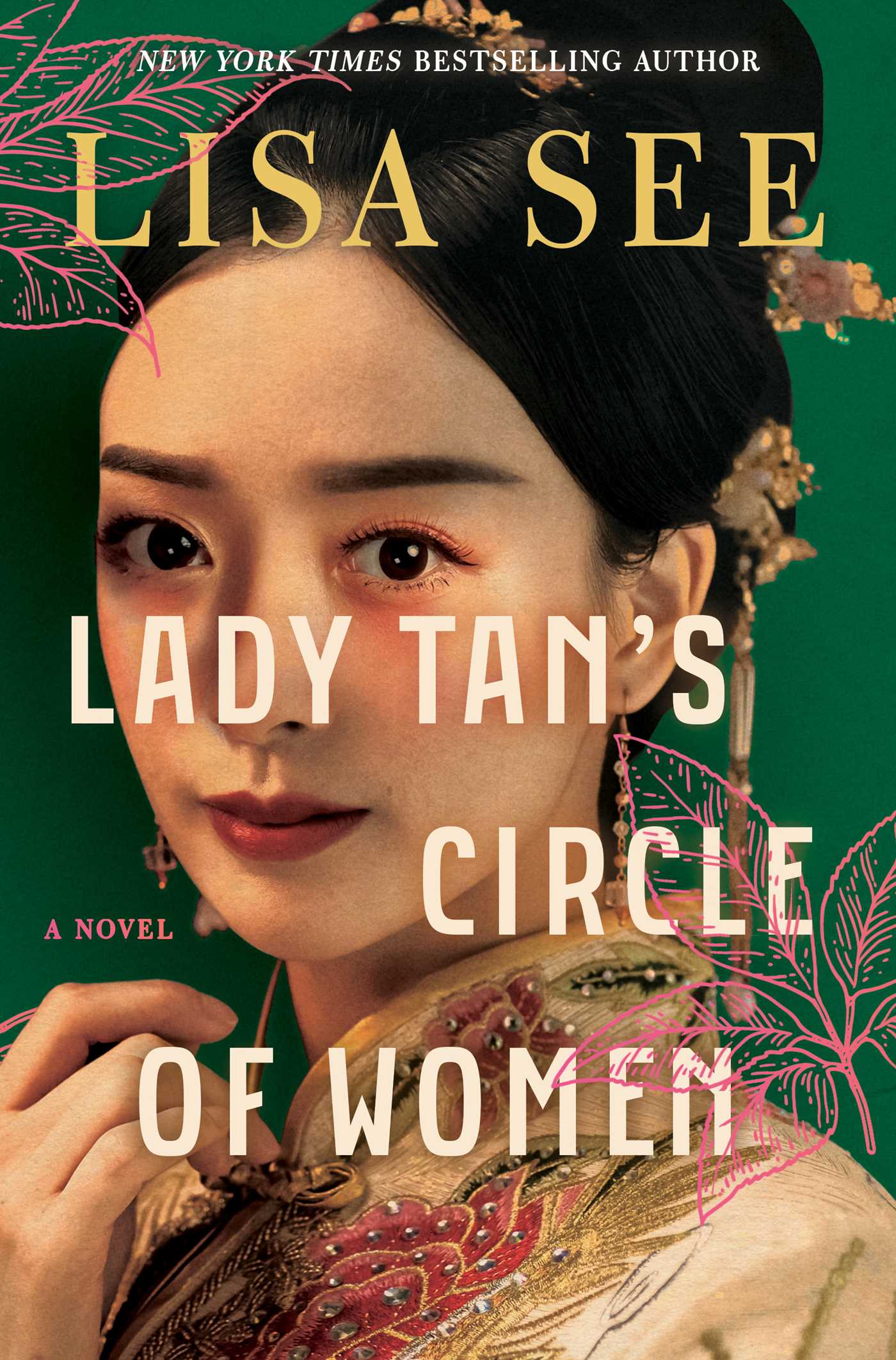
Book Review: Lady Tan's Circle of Women by Lisa See


I recently finished reading Lisa See's latest book, Lady Tan's Circle of Women.

It's a book of historical fiction based on the real life of a female physician in China in the 1500s.  Her practice covered mostly women with afflictions due to foot binding.  She lost her own mother due to an infection in her bound feet when she was still a girl.   After that, she went to live with her grandparents, who were both physicians, and to whom she apprenticed.   

For childbearing cases, she worked with a midwife who became her best friend and confidant.  Midwives could do things higher-born physicians could not -- like touch blood (There's plenty of blood in childbirth), and forensic exams.    

Although I still do not understand the philosophy informing Chinese medicine as far as the 5 pulses or the many herbal remedies, I can't argue with centuries of practice.   Lady Tan got results.   The real Lady Tan wrote and published a book about some of her medical cases, and her remedies are still used today in Chinese traditional medicine.   Apparently, Lady Tan and her friend even both got to go to The Forbidden City to help the Empress bear a child -- The trip of a lifetime for them both!

Ever since Snow Flower & The Secret Fan fell into my lap years ago, I've come to trust Lisa See as a storyteller.  Her novels focus more on the relationships and friendships of women, rather than romance.   There were so many moments when things could have turned ugly, catty, or mean, but they didn't.  The women in Lady Tan's Circle looked out for each other, and became family.  What other choice did they have?

Highly recommended!

Read more at Good Reads.

Thursday, January 18, 2024

Secrets of the Dead: Ben Franklin's Bones [PBS]

Secrets of the Dead: Ben Franklin’s Bones reveals some questionable practices in medicine. In the 18th century, private anatomy schools were set up across London to give medical students the opportunity to learn anatomy by dissecting human cadavers. But supply lagged behind demand. Anatomists needed many more bodies than the ones of hanged murderers, which were the only bodies legally available at that time for their study. This created a business for body snatchers, also known as “resurrectionists,” who exhumed corpses from graves to sell to the anatomists.


This Secrets-of-the-Dead episode was published back in 2015, but I recently saw it on Wisconsin Public Television.   I had no idea that Ben Franklin had so many friends and acquaintances in the medical / anatomy world.  

We owe a huge debt to the people who were body-snatched from their graves in the name of furthering medicine, science and our understanding of human anatomy.    Now people have the option to donate their bodies to science after death as a personal choice.   That was not the case in the 18th century when this mode of inquiry was at it's peak.

The Surgeon's Hall Anatomy Museum in Edinburgh and The Hunterian Museum in Glasgow are some of my favorite museums, and The Mutter Museum is on my bucket list of places to see someday.   But I have a new consciousness about the specimens on display now.  

How do we let them finally rest in peace?  Do we honor them for the educational purposes they took on in being displayed in perpetual preservation?   What about the medical curiosities with less of an educational slant?

A recent NNLM Webinar got me thinking about all this in a new light.  If you want to know more, please see: 

Holding Space to Discuss a Complicated Past: Exploring Medical Libraries’ Role in Perpetuating Racial Science, An NNLM Region 6 Spotlight Speaker Webinar


Friday, January 5, 2024

Liz Suelzer on Wisconsin Public Radio discussing Retractions in the Professional Literature


by Karen Hanus, Director Advocate Health - Midwest Library in Milwaukee


Liz Suelzer, Application Support Analyst Sr for the Advocate Health – Midwest Library was interviewed on Wisconsin Public Radio’s The Morning Show on January 5, 2024. 


Listen here: 

Watchdogs: More Academic and Scientific Papers should be Retracted, and more quickly


Liz and Ivan Oransky of Retraction Watch talk about:

  • retractions
  • the process of going through a retraction
  • and the impact that retracted articles have on science and research. 

Liz and a team of other WHSLA librarians published two articles in JAMA Network Open about article retractions in 2019 and 2021.


Published articles:


Suelzer EM, Deal J, Hanus KL, Ruggeri B, Sieracki R, Witkowski E. Assessment of Citations of the Retracted Article by Wakefield et al With Fraudulent Claims of an Association Between Vaccination and Autism. JAMA Netw Open. 2019;2(11):e1915552. Published 2019 Nov 1. doi:10.1001/jamanetworkopen.2019.15552


Suelzer EM, Deal J, Hanus K, Ruggeri BE, Witkowski E. Challenges in Identifying the Retracted Status of an Article [published correction appears in JAMA Netw Open. 2022 Feb 1;5(2):e223513]. JAMA Netw Open. 2021;4(6):e2115648. Published 2021 Jun 1. doi:10.1001/jamanetworkopen.2021.15648


Congratulations, Liz!  Thank you for making a unique contribution to our profession.

Book review: Brotherless Night by V.V. Ganeshananthan

 Thank you to Robert Koehler for this book review. 

Thursday, January 4, 2024

Free February Webinars from UW-Madison's Information School


Free February 2024 Webinar Series


  • Feb 9 - Library Scavenger Hunts
  • Feb 13 - Have Wagon, Will Travel. How Social Work Outreach Changes Lives
  • Feb 23 - Transgender and Nonbinary-Affirming Library Practices: From Patron Records to Restrooms (and Beyond)
  • Feb 29 - Creating Direction and Action with Continuous Improvement

Wednesday, January 3, 2024

NNLM January/February training opportunities including "Generative AI in Health Sciences Libraries"

Ready to learn something new in 2024? NNLM offers workshops, on-demand webinars, and other free educational opportunities throughout the year. 

To register just create a free NNLM account or log into your NNLM account to get started. Some sessions fill up, so register early for ones you are mist interested in. 

Happy learning!