Friday, April 28, 2017

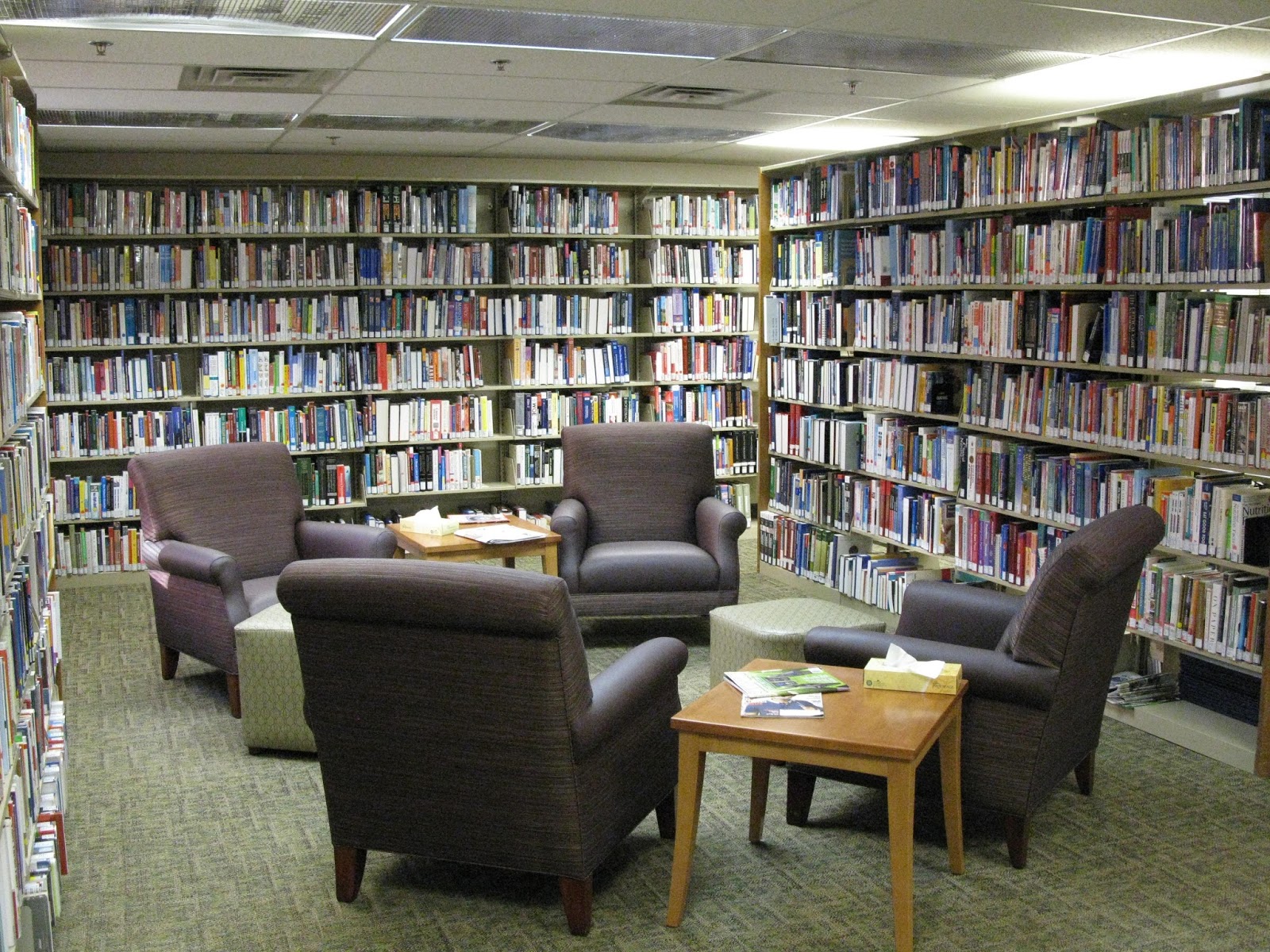
WHSLA Spotlight - Karen Hanus at the Medical College of Wisconsin Libraries in Milwaukee, WI

Karen L. Hanus, MLIS, AHIP is the Assistant Director for Collection Management at the Medical College of Wisconsin Libraries. Karen started at MCW while she was in library school and has held various positions in the library including User Education/Reference Librarian, ILL/Copyright Librarian, and Access Services Manager. 

Karen has been a WHSLA member since 1992. She has held various leadership positions in WHSLA throughout the years including two terms as President, Chair of the Communications, Steering, and Annual Meetings Committees, and Archivist. She is currently Presiding Officer of the Southeastern Wisconsin Health Science Libraries Consortium and President Elect of the Midwest Chapter of the Medical Library Association. She is a Distinguished Member of the Academy of Health Information Professionals and a graduate of the Harvard Graduate School of Education Library Leadership in a Digital Age Program.


Karen is a purebred Wisconsinite. She grew up in Menomonee Falls and earned her bachelor’s degree at Marquette University and her master’s degree at University of Wisconsin-Milwaukee. She enjoys playing Sheepshead with family and friends, going to supper clubs, and watching the wildlife in her backyard. 


Friday, April 21, 2017

Why do we itch?

Our friends at TED-Ed have done it again and provided us with a little scientific diversion on this second last Friday of April. Why do we itch? Let Emma Bryce be your guide. 

SEER*Explorer - a new interactive cancer statistics tool

While looking for cancer statistics the other day, I ran across this new tool from SEER: SEER*Explorer. It's very easy to use and quite useful to visualize cancer statistics. View the help guide here. 

  • "SEER*Explorer is an interactive tool for quick access to a wide range of SEER cancer statistics organized by cancer site and by demographic characteristics such as sex, race/ethnicity, age, and calendar year. A select number of cancer sites may also be viewed by stage at diagnosis. Statistics may be viewed as graphs or tables and downloaded for use in other programs."


 SEER*Explorer: An interactive website for SEER cancer statistics [Internet]. Beta Version. Surveillance Research Program, National Cancer Institute. [Cited 2017 Apr 21]. Available from https://seer.cancer.gov/explorer/.

Thursday, April 13, 2017

Charlie and the Chocolate Factory and the measles vaccine

Some recent news stories on the resurgence of measles mentioned children's author, Roald Dahl's connection to the issue. You know Roald Dahl... he wrote many children's stories that have stood the test of time. From Charlie and the Chocolate Factory, to Matilda and James and the Giant Peach*, I daresay most of us reading this blog have read at least one book by him.

After his daughter Olivia died of measles encephalitis, a rare complication of measles, in 1962, Roald eventually became a proponent of the measles vaccine, which wasn't available in the US until 1963 and in the UK until 1968. He even penned a letter to the public in 1988 urging people to vaccinate their children: http://roalddahl.com/roald-dahl/timeline/1960s/november-1962. 


Wednesday, April 12, 2017

It's not just you: science papers are getting harder to read

While browsing the health and medicine news over the past few weeks, I ran across this column by Phillip Ball in the journal Nature: It's not just you: science papers are getting harder to read. Do you agree? Are scientific papers getting harder to read? 

  • "Modern scientific texts are more impenetrable than they were over a century ago, suggests a team of researchers in Sweden. It’s easy to believe that.  You can be confident, for example, that if you pick up a random copy of Nature (which has long prided itself on the relative accessibility of its papers), you may find sentences like this in the abstracts:  Here we show that in mice DND1 binds a UU(A/U) trinucleotide motif predominantly in the 3' untranslated regions of mRNA, and destabilizes target mRNAs through direct recruitment of the CCR4-NOT deadenylase complex."
  • "So how could the readability of scientific papers be improved? First, by recognizing that good writing doesn’t happen by magic. It can be taught — but rarely is. Douglas suspects that many first drafts of papers are written by junior members of a research team who, lacking any model for what good writing looks like, take their lead from what is already in the journals. And there “they see the jargon and complexity as markers of what passes as scientific writing”, she adds. Such self-reinforcing mimicry could certainly account for the trends highlighted by Thompson and his colleagues. So where do you find good models of writing? Obviously, from good writers — not necessarily in the sciences, but anywhere2. There is hard evidence that sophisticated readers make sophisticated writers3. Why not encourage students to put down Nature and pick up Darwin, Dawkins or Dickens?"


Friday, April 7, 2017

Is it bad to hold your pee?

Parents with toddlers think about things that may not be appropriate in polite company. When I saw this video today I laughed out loud because I have said this exact thing several times in recent memory. Was I telling the truth? Is it bad to hold your pee in? 

Let's see what TED Ed has to say. 


Tuesday, April 4, 2017

Photic sneeze reflex, or why looking at the sun can make you sneeze

I'm always on the lookout for quirky medical and science news. This recent article published on PBS.org's NewsHour page definitely qualifies as quirky and medical. It's true: looking at the sun can make some people sneeze. 

http://www.pbs.org/newshour/updates/does-the-sun-make-you-sneeze/

============================================================

  • "The disorder is characterized by a sudden outburst of one or multiple sneezes when a dark-adapted person — they’ve been in a darkened space for a while — is suddenly exposed to light. Sunlight is a trigger, but artificial illumination from light bulbs and camera flashes can also cause sneezes. Additionally, a not-yet-established length of time in a darkened space — called a refractory period — must pass before an individual with photic sneeze reflex will sneeze in light again.“It’s not a disease,” University of California, San Francisco neurologist and human geneticist Louis Ptáček told the NewsHour. “Some people find it annoying, but some people like it to some extent. They’ll say, ‘It helps me get a sneeze out.’”
  • "As it turns out, an estimated 10 to 35 percent of the population has a photic sneeze reflex. Because its prevalence is higher in individuals with a family history of the disorder, the handful of scientists who have studied the phenomena suspect a genetic, autosomal dominant — a person needs only one parent with the condition to inherit it."


Friday, March 31, 2017

Public Health Research - a how to recording from the GMR

Hi All—

Just wanted to recommend this 1-hour program that aired last week.  It has several useful public health sources you may not have heard of – and they are evidence-based.    I watched it 1) because I’ve always been interested in Public Health initiatives (My mom worked in that field for 25 years), and 2) the sources and approach to PUBLIC health care is a little different than what you may be used to in acute care and clinic settings.   Since improving community health is one of the core missions many of our health care organizations share,  I thought many of you could benefit from this webinar, too.   

To top it all off, a day later, our local Community Health Improvement Liaison, who works with the local public health department, asked for some research on any public health initiatives to reduce the amount of sugar people consume.  They wanted best evidence on other successful programs out there.  I know I can use several of the sources presented in the program below … that go beyond searching PubMed / Medline and CINAHL.

  • FROM THE GMR - From Problem to Prevention: Evidence Based Public Health Health Professionals Outreach Specialist Derek Johnson taught “From Problem to Prevention: Evidence Based Public Health” on Wednesday, March 22, 2017. A recording of the class is now available on YouTube. MLA Continuting Education (C.E.) credit is available for viewing this recording. If you’re interested in C.E. credits, email the GMR Office at gmr-lib@uiowa.edu
Cheers!
Michele


Thursday, March 30, 2017

WHSLA Spotlight - Jennifer Schramm at Mayo Clinic Health System Wisconsin Libraries in Eau Claire, WI

Hello, I’m Jennifer Schram, the library supervisor at the Mayo Clinic Health System Wisconsin Libraries.  We have two locations, one in La Crosse and one in Eau Claire, and are part of the Mayo Clinic Libraries across the United States.  One thing that I think is unique to the MCHS-Eau Claire library is that we have a large audiobook collection.  This has been very popular with staff as we are fairly spread out geographically and some staff spend a good deal of time traveling between sites.  We also send out an email newsletter every other week or so highlighting new books/audio or sometimes older items that haven’t been on in a while.  This newsletter goes out to over 5000 staff, and the response has been overwhelmingly positive.  Not only has this greatly increased our circulation but serves as a reminder that the library is here to help.  


I have a BA in Philosophy from Mount Mary University (2002) and a MLIS from the University of Wisconsin-Milwaukee (2007).  I started as a library assistant at Froedtert Hospital in 2003 before accepting a librarian position in 2006 and moving to Eau Claire, WI.  In 2016, I became the library supervisor.  My primary duties are management, overseeing the patient library, ILL, collection development, budgeting, research requests, orienting new employees, and outreach to departments.  In addition to serving on several state and local library committees, I am the WHSLA membership coordinator, so please send your membership renewals!


While my husband, Tony, and I are both from southeast WI, we found we love living up north.  It can be quite cold in the winter, but we do not miss the Milwaukee traffic!  We have two dogs named Harry and Poogle.  Poogle is a 5 year old beagle poodle mix and Harry is a 1 year Aussie.  We also have a 6.5 month old baby girl named Madeline (Maddie), and while I’m sure that all moms think this, she is truly the best baby ever.
I used to have hobbies but I cannot really remember them right now. (Does doing laundry or washing bottles count as hobbies?)  I think I used to read, scrapbook, travel and cook….and someday will do those things again.  But for now my hobbies are Maddie and the dogs. 


Friday, March 24, 2017

Jared, the singing nurse (get your tissues out)

This lovely video came up in one of my social media feeds this morning. When I looked for more videos and postings featuring nurses who sing to their patients, I was overwhelmed at how many there are. 

Enjoy this short profile of Jared, the "singing nurse", as he bring smiles and comfort to patients in the hospital. You might want to have a tissue handy.