Wednesday, March 30, 2022

New Interactive DOCLINE® Tutorial: How to Place an Interlibrary Loan Borrow Request

 This may be "old hat" for most of us, but I thought it was worth sharing here ...


New Interactive DOCLINE® Tutorial: How to Place an Interlibrary Loan Borrow Request.  NLM Tech Bull. 2022 Mar-Apr;(445):b7.

2022 March 29 [posted]

The DOCLINE® team from the National Library of Medicine (NLM) is pleased to announce the first release of a set of new or revised interactive tutorials on using DOCLINE, “How to Place an Interlibrary Loan Borrow Request”. This 10-minute tutorial walks users through how to place a DOCLINE request using a PubMed ID (PMID), a journal unique identifier, or manually with citation information. Stay tuned for additional tutorial releases coming in 2022.

For more information on using DOCLINE, visit the DOCLINE System User Resources page, which has FAQs, a user manual, and other resources.


Wednesday, March 16, 2022

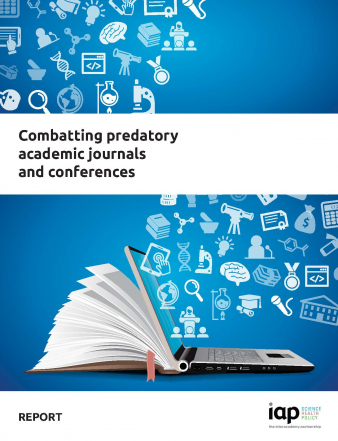
Report on Combatting Predatory Journals


Combatting Predatory Journals and Conferences

A new report from the InterAcademy Partnership (IAP) examines the problem of predatory academic journals and conferences, which are motivated by profit rather than scholarship and which exploit pressure on researchers to publish their work. The report offers recommendations to help researchers make informed choices about where to publish and present their work.


Want to see more like this?

See the latest list of publications from The National Academies of Sciences Engineering & Medicine.  Most titles allow you to download a PDF copy for free, or you can purchase a print copy.  

Wednesday, March 9, 2022

Social Interoperability: A New Buzzword for Making Connections

Free Image from Pixabay.

I recently attended a webinar where the speaker used the term social interoperability, which he attributed to OCLC having coined in a 2020 report on research support.  

The context was academic libraries supporting research efforts across campus, but this could easily apply in hospitals or health systems -- or any organization prone to working in silos.  The more I thought about it, it's about networking and managing the matrix, making connections where there were none before to make the organization work better.  Creating connections between nodes.   Sort of like the old telephone operators plugging in the lines at the switchboard to make connections between callers.  I'm probably dating myself with that image ...

The point is: We're all part of the same jigsaw puzzle.  Everyone has a different view of the organization and their place in it.  We all know someone who could help in any given situation, who might have certain knowledge / info, so why not make those connections?  Often, it only take a couple of degrees-of-separation to track down the person with the answer.

Here's an example from my own library this week:  

A nurse, updating a local dept. policy, asked me for the current edition of The Nutrition Care Manual.  I did not have it in my library.  From what I could tell, this is an ebook only available from the American Diabetes Association's Eat Right Store.  I was not able to purchase it through our regular library ebook vendors.  And as an ebook, there was little chance I'd be able to borrow it through ILL on her behalf.  If I was going to get it for her, I'd need to take a different approach ...  I remembered that in the past our Food & Nutrition Dept. used this manual, so I made some inquiries ...  and sure enough, they had access to the current edition and showed me how to get to it on our intranet.  So I was able to connect the nurse with the dietician who had the info she needed.  I also made some notes on our LibGuides and catalog/opac explaining who to contact and how to access this resource to make it easier to track down next time.

How do YOU make these kinds of connections in your organization?  

Share in the comments below ...


Friday, March 4, 2022

The Ghost Map : The Story Of London’s Most Terrifying Epidemic–And How It Changed Science, Cities, And The Modern World by Steven Johnson [book review]

The Ghost Map is a riveting account of London’s cholera epidemic of 1854.  In setting the stage of the outbreak, Steven Johnson describes what the largest city in the world at that time would have smelled like to its inhabitants.  Lacking proper sewage systems, access to clean water, and with garbage and waste dumped into cesspools outside homes or into basements, he invokes the overpowering stench of London’s neighborhoods.  At the time of the outbreak, most officials and scientists believed the cause of the cholera outbreak was attributed to “miasma,” a disease caused by air-borne transmission.

There was one physician living in the area, though, who believed that the spread of cholera was water-borne.  During the outbreak, John Snow set out to prove his theory, mapping where those who fell ill were getting their drinking water, finally focusing on a single well in the affected neighborhoods.  At the same time, a young clergyman living in the area, Henry Whitehead, also began to investigate the epidemic’s cause.  It would take some years before their findings were accepted by the wider scientific community, but ultimately their detailed “ghost maps” of the epidemic proved the evidence showing that drinking water was indeed the smoking gun in the disease’s transmission.

Johnson addresses the histories about the spread of disease and how often medical science is blinded by established beliefs.  But due to the detailed maps that Snow and Whitehead created during that particular outbreak, future epidemiologists gained a valuable tool still in use today.  Thanks to these two men (and a few other scientists across the globe), their findings ensured the growth of large cities in which the transmission of disease has been mostly controlled.  While published in 2006 before our current COVID pandemic, Johnson does address the likelihood of future infectious disease outbreaks, providing suggestions on how the scientific community should deal with them.  In the author’s user-friendly prose, this book makes for an informative and fascinating read as we again grapple with the issue of infectious disease in a world where it pays no heed to countries’ boundaries. 

- book review by Robert Koehler


Do optical illusions help us learn to read?


New NNLM Region 6 Project Awards

Enjoy the newest Speaker Spotlight Series from NNLM Region 6. Hear about the new awards straight form the horses' mouths.

2021 Award Recipients:
  • Michelle Anderson at Atlanta Public Library in Iowa 
  • Stacy Knight-Davis  at Eastern Illinois University
  • Tom Cytron-Hysom from NorthStar Digital Literacy

Friday, February 25, 2022

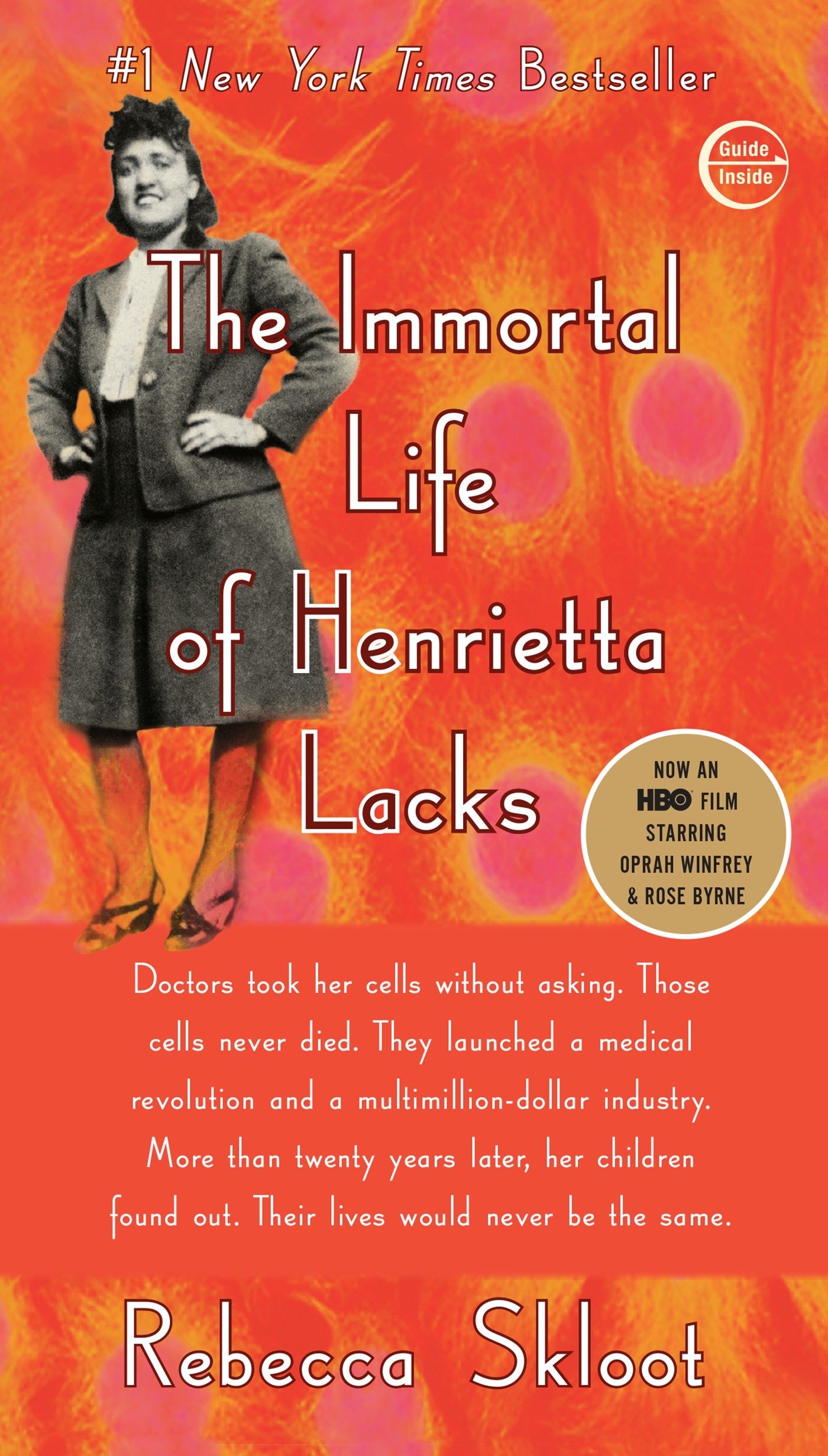
Henrietta Lacks and HeLa Cells


Henrietta Lacks: The Mother of Modern Medicine 

Smithsonian National Portrait Gallery

This post is a summary and follow-up to some of the things I learned about Henrietta Lacks through AAMLA's Experience MLA in February.  The African American Caucus of the Medical Library Association hosted a 3-week online book discussion of The Immortal Life of Henrietta Lacks by journalist Rebecca Skloot.

In small group discussions with facilitators, participants had the opportunity to thoughtfully and eloquently wrestle with some of the ethical, health equity, patient-provider communication and other difficult issues raised by the case.  I was grateful for the opportunity: Some books are definitely better discussed!


  • The month-long focus on Henrietta Lacks culminated in a talk by Chris Belter, Informationist at The NIH.   If you have a current MLA Membership, you can watch the recorded Experience MLA 2022 session here.   If you are not a current MLA member, the Bright Talk below is similar:

Analyzing the Legacy of Henrietta Lacks; The Impact of HeLa cells on Research:   
Bright Talk from November 2019

Presented by: 
Chris Belter, Informationist at the NIH Library, and Holly J. Falk-Krzesinski, PhD, ICSR Advisory Board Member & VP, Elsevier
 
About this talk:
In 1951, a young black woman named Henrietta Lacks was diagnosed with cervical cancer. During her treatment, her doctor took a sample of her cells and tried to grow them in culture. The cells, called HeLa cells, were the first human cells that could be grown in a laboratory and are still the most widely studied cells in biomedical research, having led to treatments for diseases such as polio, HIV, and cancer. 

  • HeLa Cells: A Lasting Contribution to Biomedical Research 
  • The NIH created this site in response to The Lacks Family asking exactly what wonderful scientific advances came of their mother's HeLa cells.  This is the result of Chris Belter's project above ...  in plain language.    
  • After reviewing 110,000 papers published between 1953 and 2016, the website includes a timeline showing SOME of the scientific advances made possible by the immortal HeLa cells, such as:
    • laying the groundwork for the polio vaccine
    • helping scientists understand the effects of x-rays on human cells
    • developing cancer research methods
    • Research on infectious diseases such as how do salmonella and TB make people sick
    • slowing cancer growth
    • understanding HIV infection
    • learning how cells age
    • understanding how viruses cause certain cancers
    • Efforts to protect privacy while advancing science.

Looking for even more information, see this excellent guide from Columbia College:  

Wednesday, February 23, 2022

How music can be used for therapy - WPR's Morning Show

On my way into work today, I heard some of an interesting segment on WPR's Morning Show. Dr. Dale Taylor, Professor Emeritus from UW-Eau Claire, spoke about his experience as a music therapist and where music therapy as a discipline is headed. 

Listen to the segment here.

Tuesday, February 15, 2022

Down the rabbit hole

Did you ever see an article trending on PubMed and then wonder to yourself "WHY on earth is that trending now?"  (Especially when an article that probably SHOULD be trending is much further down the list)Then you click on it because the title is so horrifying and curiosity gets the better of you (which lots of other people probably did too, and now the article is suddenly trending on PubMed).  

Before you know it, you're finding other related horrifying medical articles and staring at the reference list wondering why so many pregnant women were gored by cattle in 1887 that it warranted a study.


WHAT DID I JUST READ???


Monday, February 14, 2022

Drag Queen Story Hour: Part of Experience MLA

“Tall Tales with True Queens” is a short film directed by Kristina Budelis and Leandro Badalotti that offers a taste of Drag Queen Story Hour from our NYC chapter. As  9-year-old attendee Lilli says in the film, “Drag queens should go on and never stop, because I think it’s a really cool program.” The film was scheduled to premiere at the Tribeca Film Festival (canceled due to the pandemic) and premiered on the LGBTQ news site them.


As part of Experience MLA this February, The Hospital Library Caucus sponsored a session on Drag Queen Story Hour, in an effort to foster diversity and inclusion.

Who doesn't love being read to?

The program was lead by Per Sia, who did the very first Drag Queen Story Hour ever in 2015 in San Francisco.  By day, she is a teacher where reading is an important part of her job.  She understands the importance of reading to children.


The last part of the hour, Ms. Amanda Lynn read 3 stories to us over Zoom (What a treat!) 
DQSH has a favorite list of books that focus on inclusion and diversity.  Ms. Amanda is a big fan of books from the APA's Magination Press that tackle identity and not fitting in.

Ms. Amanda's day job is a Pediatric Cardiology Nurse in Chicago, so she, too, works daily with kids.  It's a natural tie in to have a program like this in the pediatrics dept. of a hospital.  Not just for public libraries!

Quotes from the Queens:

"We're like clowns, only prettier!"

"Drag is not how you identify. It's about bringing a character to life!"

-- Posted by Ms. Wasabi Pearl  

[As part of the program, the Ladies tell how you can choose your own Drag Queen name!  Join the fun!]