For those interested in military medince, the University of South Alabama's Charles M. Baugh Biomedical Library is hosting a virtual book discussion next week.
For those interested in military medince, the University of South Alabama's Charles M. Baugh Biomedical Library is hosting a virtual book discussion next week.

The NNLM is offering a book discussion on Meghan O'Rourke's book, running from August 14 through October 31.After acquiring the book in your preferred format, join NNLM any time between August 14 until Oct 31 to participate.
Live Discussion
NNLM Book Discussion offers librarians and library staff interested in better understanding health issues faced by people in the communities that they serve an opportunity to explore topics with other professionals and earn Continuing Education Credit.
Participants can complete the book and earn CE credit on their schedule. A new book is selected each quarter. Participants can acquire the book in their performed format and have three months to complete the requirements.
Requirements to earn CE.
It is not necessary to engage in Moodle discussions for all three months, although you are welcome to do so.
Objectives:

Henrietta Lacks: The Mother of Modern Medicine
Smithsonian National Portrait Gallery
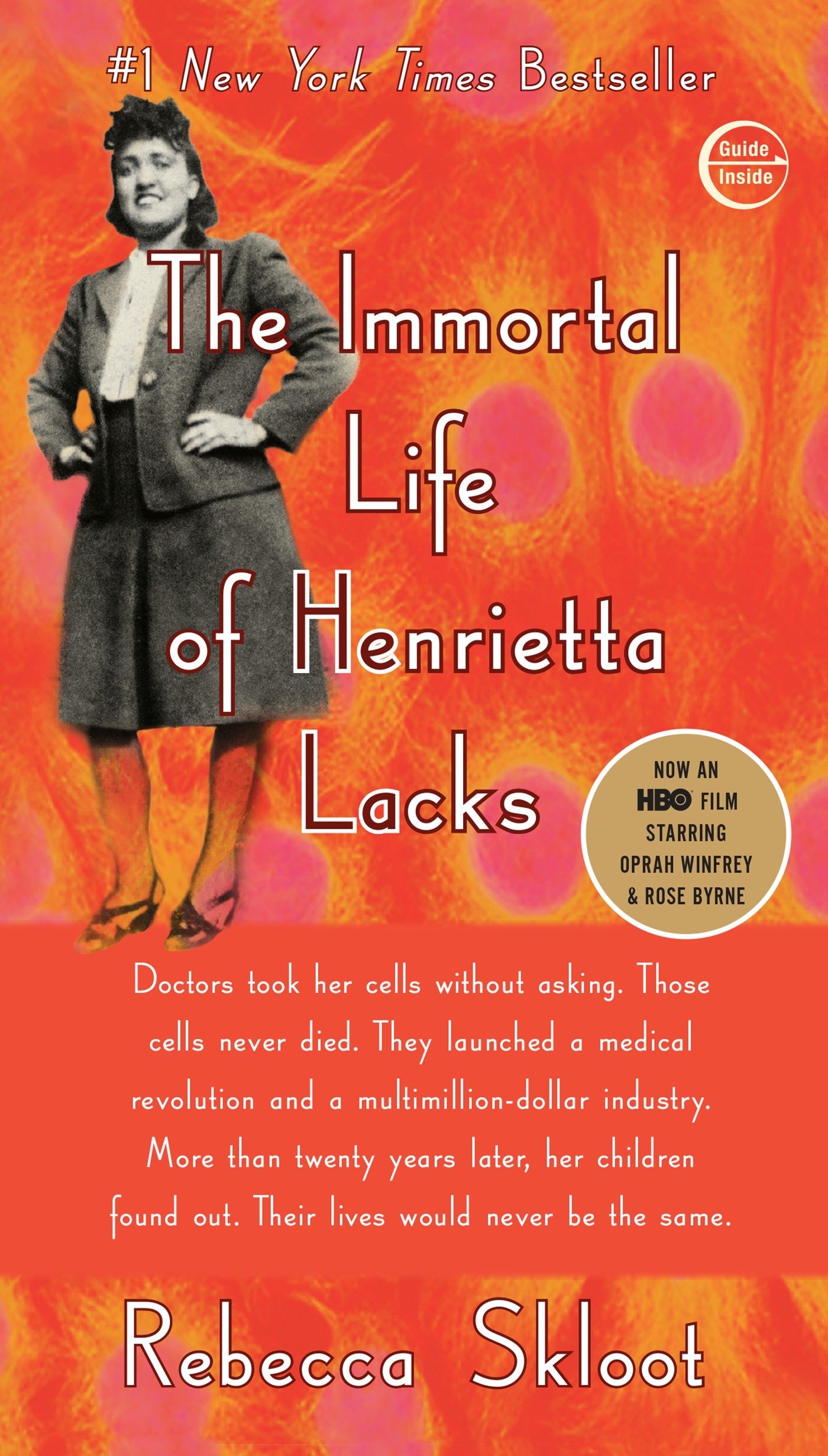
This post is a summary and follow-up to some of the things I learned about Henrietta Lacks through AAMLA's Experience MLA in February. The African American Caucus of the Medical Library Association hosted a 3-week online book discussion of The Immortal Life of Henrietta Lacks by journalist Rebecca Skloot.
In small group discussions with facilitators, participants had the opportunity to thoughtfully and eloquently wrestle with some of the ethical, health equity, patient-provider communication and other difficult issues raised by the case. I was grateful for the opportunity: Some books are definitely better discussed!
Presented by:Chris Belter, Informationist at the NIH Library, and Holly J. Falk-Krzesinski, PhD, ICSR Advisory Board Member & VP, Elsevier
About this talk:In 1951, a young black woman named Henrietta Lacks was diagnosed with cervical cancer. During her treatment, her doctor took a sample of her cells and tried to grow them in culture. The cells, called HeLa cells, were the first human cells that could be grown in a laboratory and are still the most widely studied cells in biomedical research, having led to treatments for diseases such as polio, HIV, and cancer.
Looking for even more information, see this excellent guide from Columbia College:
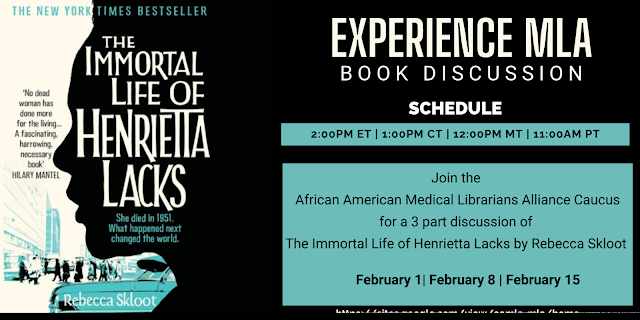
Join the African American Medical Librarians Alliance (AAMLA) Caucus for a 3-part discussion of The Immortal Life of Henrietta Lacks by Rebecca Skloot during the Experience MLA annual event.
MLA CE credit will be provided for this activity.
The Experience MLA Events are open to non-MLA members, so feel free to invite others.
In preparation for the discussion attendees should read or watch one of the following:
Read: Skloot, R. (2010). The Immortal life of Henrietta Lacks. New York: Crown Publishers. [Books will not be provided]
OR
Watch: HBO Films, The Immortal life of Henrietta Lacks starring Oprah Winfrey and Rose Byrne
BOOK DISCUSSION
February 1, 8, and 15, 2022
1:00 - 2:30PM (CST)/2:00 - 3:30 PM (EST)
Registration is not required, but encouraged as it gives the organizers an idea of how many facilitators will be needed to lead discussions.
[If you tried to register, but sessions were full, try again. It looks like they added more tickets.]
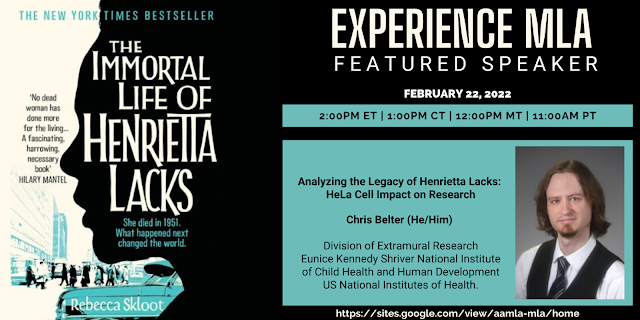
CLOSING SPEAKER
February 22, 2022
1:00 - 2:30PM (CST)/2:00 - 3:30 PM (EST)
The Series will conclude on February 22, 2022 with a presentation from Chris by Analyzing the Legacy of Henrietta Lacks: HeLa Cell Impact on Research.
